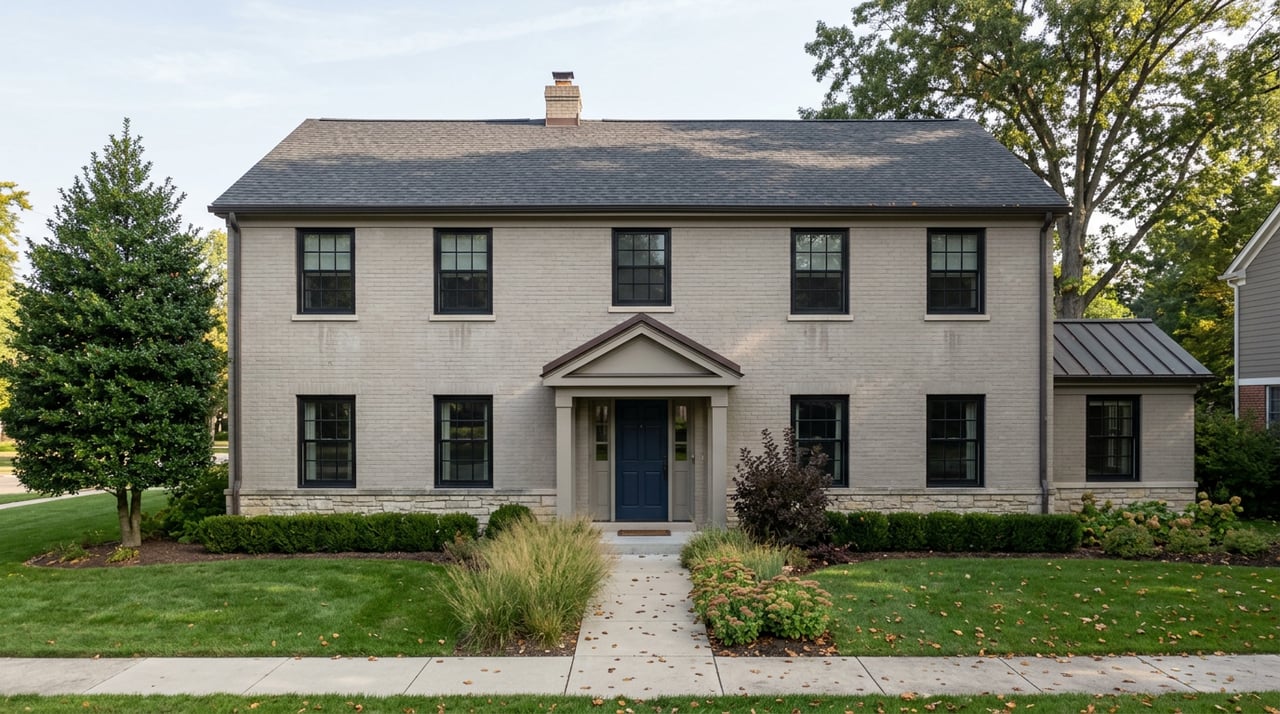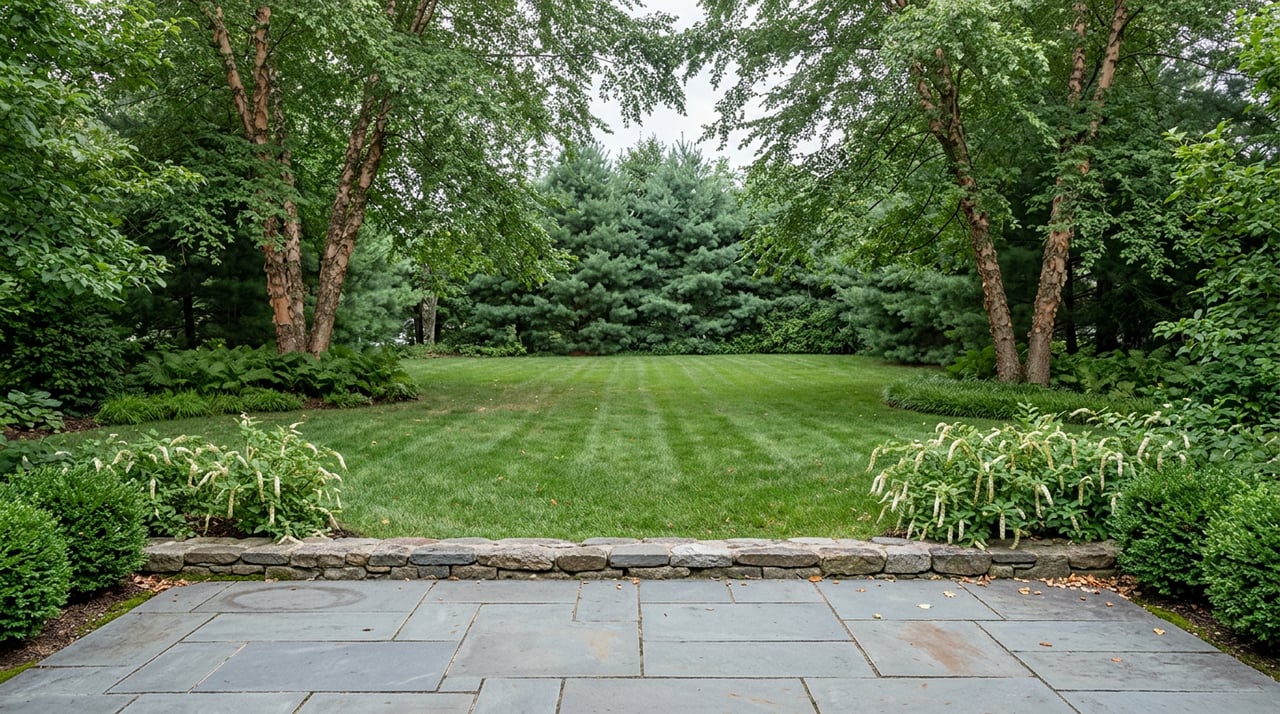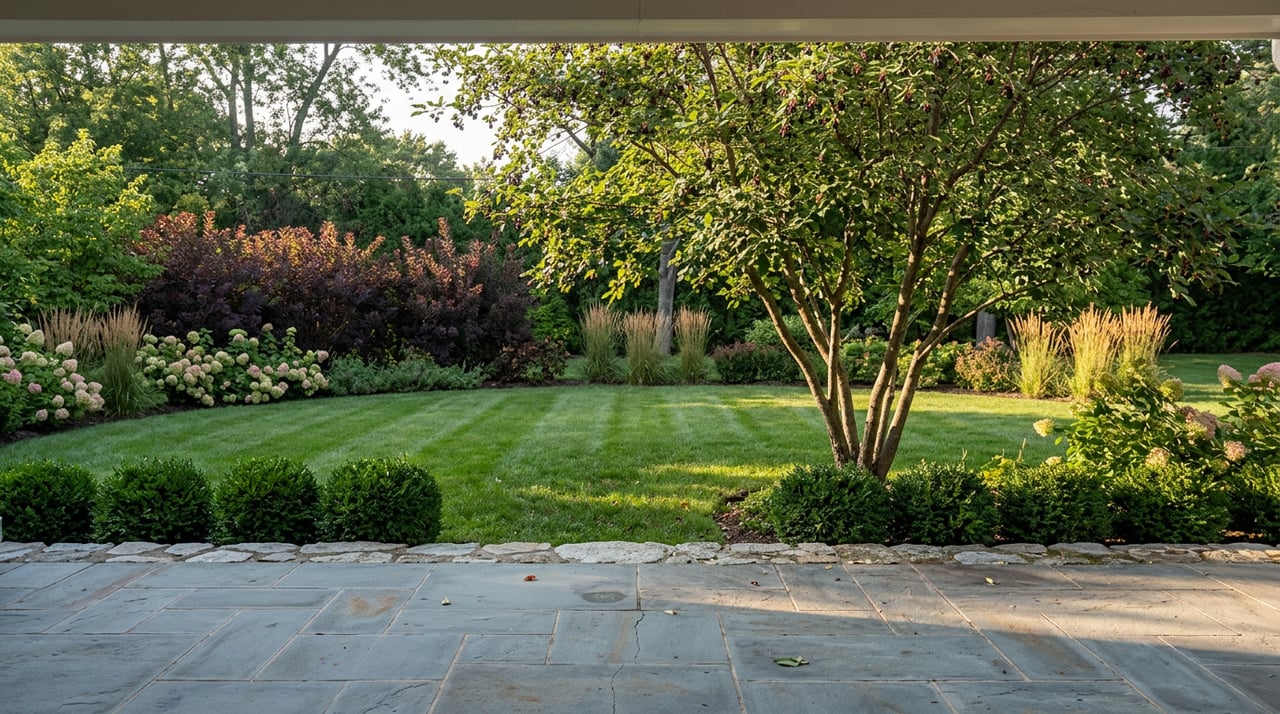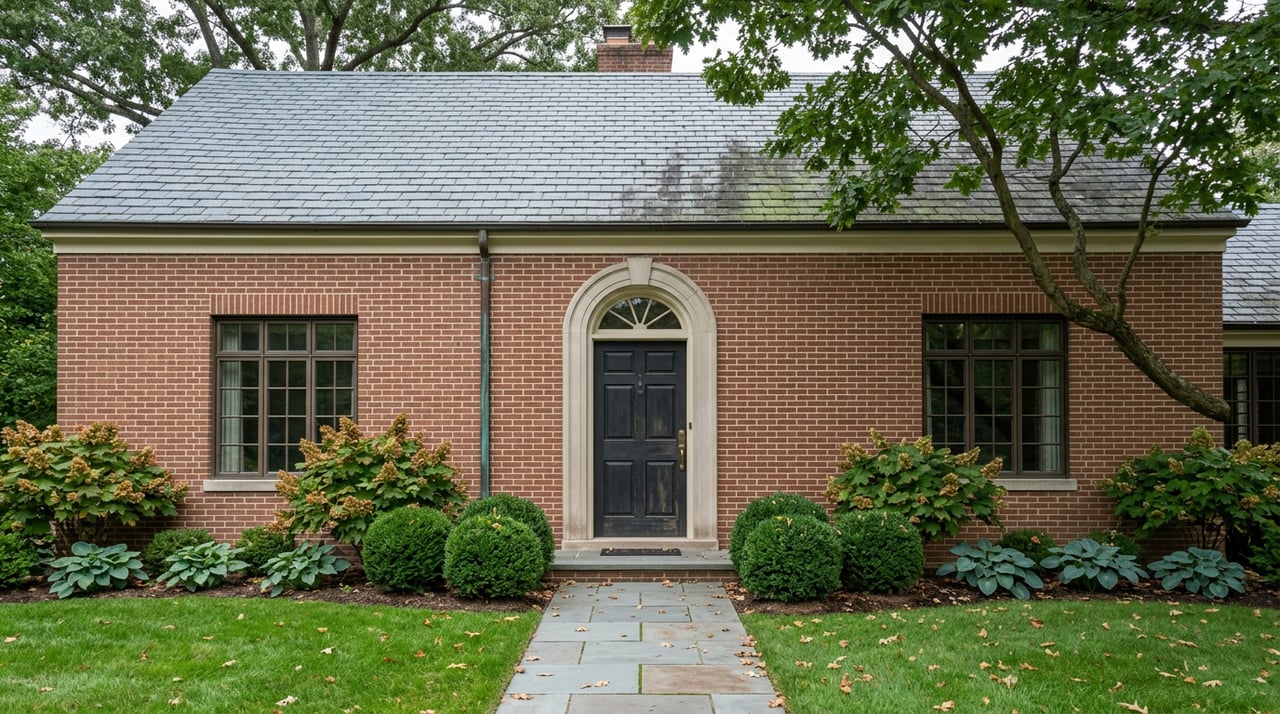
A house on the 4500 block of Arden Avenue sat empty for parts of five years while its owners negotiated with the city of Edina over what they were allowed to do with it. The 1926 home needed work. A renovation plan was proposed, approved, started, then stopped when a structural engineer found the foundation unsafe. The house came down in October, on a lot where the rulebook says almost nothing should come down. A preservationist who watched the fight summed up the trade every owner in the neighborhood has made: buy on the National Register, and "you agree to certain rules."
That trade is the real story hiding underneath every "median home price in Edina" headline you'll read this year. The city's overall number, whichever version you're looking at, blends a French-doors condo above a grocery store with a 1930s Tudor that legally cannot be torn down. Buyers comparing neighborhoods on price alone are comparing numbers that were never describing the same kind of ownership to begin with.
Three Numbers, Same City, Same Season
Pull Edina's home price from three different sources this year and you'll get three different stories about the same market. As of February 2026, one major data provider put the median sale price at $788,000, up 25 percent year over year, with homes taking 75 days to sell compared to 69 days the year before, on a pool of just 32 closed sales. A second portal, looking at the same February, reported a median closer to $749,950 across 226 sales. A third, using a smoothed valuation index rather than actual closed sales, put the average home value at $605,433 as of May 2026, up less than 1 percent for the year.
None of these are wrong. They're measuring different things. A median of 32 closed sales in one month is going to move a lot depending on whether a couple of Country Club estates or Indian Hills teardown lots happened to close that month, versus a run of France Avenue condos. An index built from estimated values across the entire housing stock moves much more slowly and captures a different, calmer picture. In a city of roughly 54,000 residents with dozens of distinct pocket neighborhoods, a single monthly median was never built to describe Edina. It describes whichever slice of Edina happened to transact.
That instability matters most for the buyer trying to decide between two very different kinds of Edina address: the historic ones and everything built after them.
What the Median Hides
Edina's Country Club District is a 14-block enclave bounded by Minnehaha Creek, Sunnyside Road, Arden Avenue, and West 50th Street. It holds roughly 555 homes, the large majority built between 1924 and 1944 under the original design covenants of developer Samuel Thorpe. The district was added to the National Register of Historic Places in 1980, and in 2003 the city layered on a Heritage Preservation Landmark zoning designation that gives the historic status actual local teeth.
That local overlay is the part buyers researching neighborhood comparisons tend to miss. The city's own description of the district requires a Certificate of Appropriateness for any work that needs a city permit for demolition or new construction of a principal dwelling or detached garage, and for any significant structural change to a street-facing facade. Homes cannot be torn down unless the applicant can show the property no longer contributes to the district's historic character, typically because it has deteriorated, been damaged, or been altered beyond recognition. Since 2000, only a handful of homes in the district have come down under those terms, according to Star Tribune reporting on the neighborhood.
Arden Park, immediately adjacent, sits under none of that overlay. It gets described locally as the neighborhood where a buyer can get a Country Club-adjacent walk to the golf course and the 50th and France shops without inheriting the rulebook, which is part of why it's positioned as the practical choice for anyone who wants to build new rather than restore old. A few blocks over, the 50th and France condo corridor runs through three distinct buildings with three distinct price floors: The Lanterns, built in the 1970s and priced from roughly $200,000; The Henley, built in 1994 and priced from roughly $300,000; and 5000 France, completed in 2006, where most units sell above $1,000,000. None of those buildings answer to a Heritage Preservation Board. They answer to a condo association.
| Submarket | What governs it | What that means for an offer |
|---|---|---|
| Country Club District | City Heritage Preservation Landmark overlay | Facade changes and any teardown require Certificate of Appropriateness review; new escrow fee applies starting January 1, 2026 |
| Arden Park | Standard Edina zoning | Renovation and rebuild proceed under ordinary city permitting, no preservation board review |
| 50th & France condos (The Lanterns, The Henley, 5000 France) | Condo association bylaws | Exterior changes governed by the association, not the city; unit price tied to building era and finish level |
Three addresses within walking distance of each other, three completely different sets of rules attached to the deed. A generic Edina median doesn't just average different price points. It averages different amounts of legal freedom to change the thing you're buying.
What Changed on January 1
The Country Club Plan of Treatment, the document that guides how the city's Heritage Preservation Commission evaluates every proposed change in the district, was just updated. The Edina City Council approved Ordinance 2024-06, amending the Heritage Preservation Commission and Heritage Landmarks rules, alongside Resolution 2024-77, approving the revised Plan of Treatment, with an effective date of January 1, 2026. Part of that update adds a new escrow requirement for properties within the Heritage Landmark district and for individually designated Heritage Landmark properties elsewhere in Edina.
The public comment record on the update tells you why the city bothered. Neighbors described a home on Arden Avenue that sat boarded up and neglected for three years after a developer bought it, then took more than a year to renovate once work finally started, with equipment and materials parked on the block the whole time. Supporters of the update wanted enforcement mechanisms with, as one commenter put it, actual teeth. The escrow piece is the city's answer: a financial backstop tied to the property, meant to keep a stalled renovation from turning into a years-long eyesore on a block where every other house still looks like 1930.
For a buyer, the practical read is straightforward. If you're writing an offer on a Country Club home with renovation in mind, budget for the Certificate of Appropriateness review timeline before you set a contractor start date, and confirm with your closing team how the new escrow requirement applies to your specific property before you waive a due diligence contingency to compete on price.
The Alternative Down the Street
None of this makes Country Club a worse purchase. Buyers choose it precisely because the rules protect what they're paying for: a block where the rooflines still line up and the streetscape hasn't been re-negotiated one modern build at a time. But it does mean the neighborhood comparison a buyer should be running isn't Country Club versus some other Twin Cities suburb. It's Country Club versus Arden Park versus the France Avenue condo corridor, three Edina addresses with three different answers to the question of what you're allowed to do once the sale closes.
A Few Questions Worth Asking Before You Write an Offer
Does the Certificate of Appropriateness process apply to interior renovations? No. The review applies to demolition, new construction of a principal dwelling or garage, and significant changes to street-facing facades. Interior work generally does not trigger the process.
Is the new escrow fee a fixed amount? The city's 2026 update establishes the requirement for Heritage Landmark properties and the Country Club District specifically. The exact figure and application should be confirmed directly with the city before closing on a property where renovation is part of the plan.
Can any Country Club home be torn down? Only if the applicant demonstrates the home no longer contributes to the district's historic character, typically due to deterioration or structural failure documented by an engineer. It has happened, but it is the exception, not a workaround.
If you're comparing a historic Edina address against a newer build a few blocks away, the right conversation happens before the offer, not after inspection. Tonia Kurth and the BOOST Real Estate Group team work through these neighborhood-by-neighborhood tradeoffs with buyers across Edina every week. Schedule a Real Estate Strategy Call to walk through what a specific address actually allows before you decide what to offer for it.